From practitioners, for practitioners 🌿
Forest school activities
Ideas that have actually been run, written down by the people who ran them, what you need, how it goes, and where it tends to go wrong. Free to use, no account needed to read them.
Where would you like to start?
Craft
Making something with your hands, out of what the wood gave you that morning. Craft is often the quietest part of a session, and the part children talk about at home.
Bushcraft
Shelter, cordage, tracking, tools. The skills that make a wood feel like somewhere you can look after yourself, and the ones children ask for by name.
Nature
Looking closely at the wood you're already standing in, its minibeasts, its seasons, the things that were there all along.
Ropes & knots
Swings, slacklines, lashings and cordage. Children practise knots for the pleasure of it, then use them for something they actually want.
Fire
Lighting it, feeding it, sitting round it. Fire is the heart of most sessions and the thing children remember longest.
Cooking
Bread on a stick, popcorn in a pan, soup out of the hedge. Food cooked on the fire you built is the best ending a session has.
Games
Hiding, stalking, chasing, teaming up. Games are how a collection of children becomes a group.
Mud & water
Mud kitchens, dams, potions and puddles. The messiest hour of the week, and reliably the one they ask for.
Good right now, in October
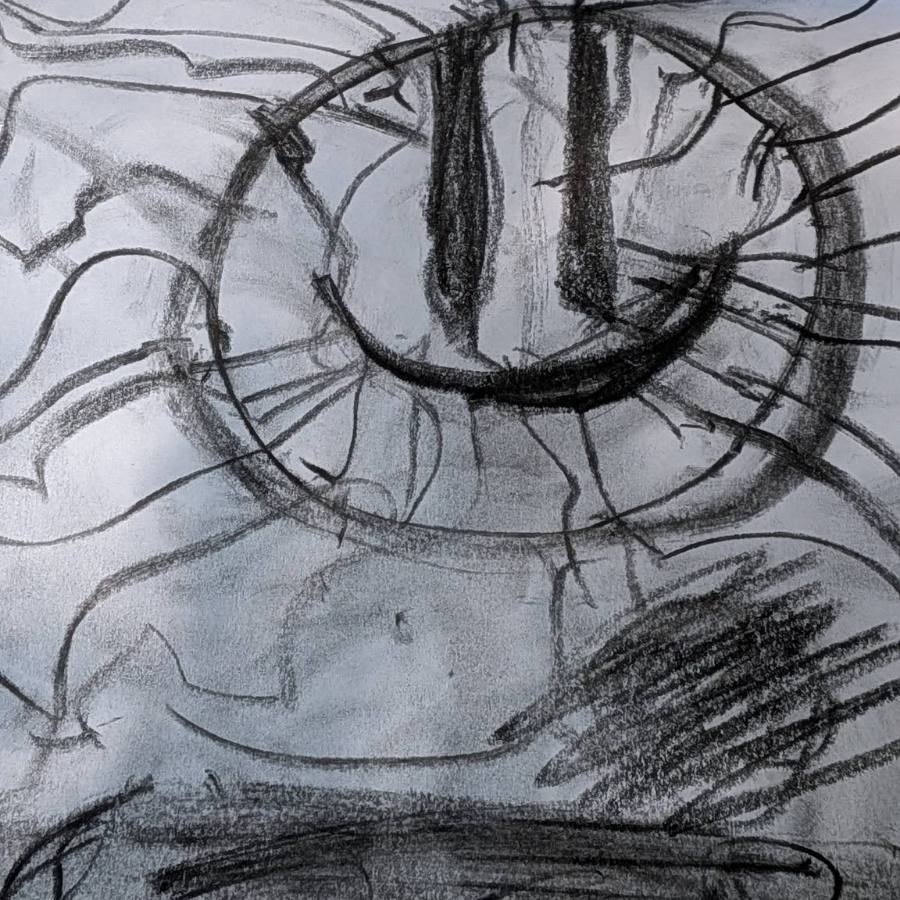 Fire · Bonfire Night
Charcoal from the fire: woodland drawingMake your own charcoal in a biscuit tin on the embers, then draw with it: fire, chemistry and art in one session. A natural Bonfire Night pairing.
Fire · Bonfire Night
Charcoal from the fire: woodland drawingMake your own charcoal in a biscuit tin on the embers, then draw with it: fire, chemistry and art in one session. A natural Bonfire Night pairing.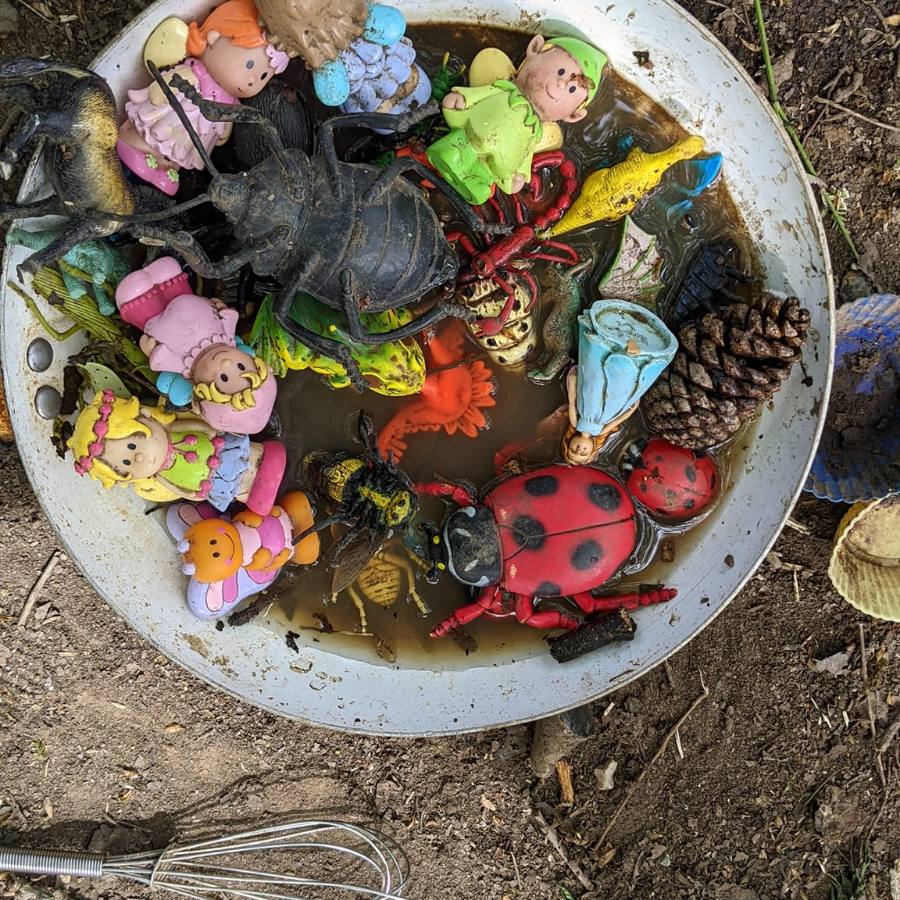 Craft · Halloween
Woodland wands and potionsHalloween the forest-school way: whittle-free wand decorating, then a potion station of mud, petals and 'eye of newt' (acorns) with incantations mandatory.
Craft · Halloween
Woodland wands and potionsHalloween the forest-school way: whittle-free wand decorating, then a potion station of mud, petals and 'eye of newt' (acorns) with incantations mandatory.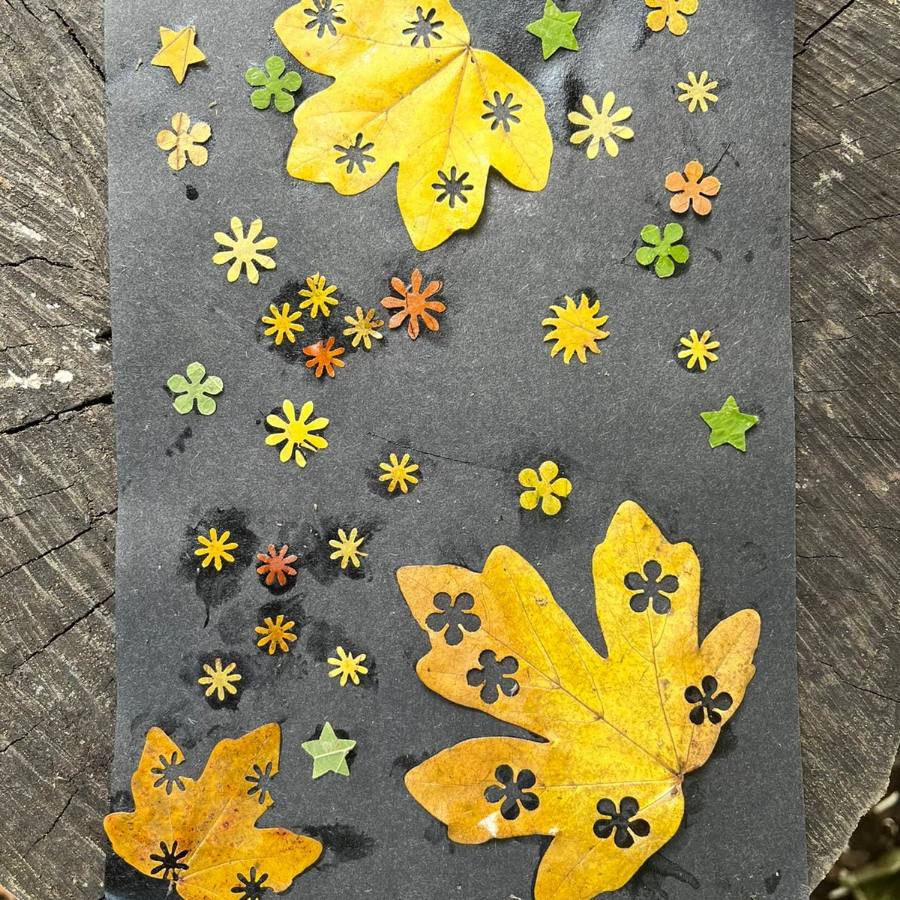 Nature · Autumn
Leaf mandalasBig collaborative land art from autumn's free art supplies: sort by colour, build outward from the centre, photograph from above before the wind takes it back.planned 1×
Nature · Autumn
Leaf mandalasBig collaborative land art from autumn's free art supplies: sort by colour, build outward from the centre, photograph from above before the wind takes it back.planned 1× Craft
Elder bead jewelleryElder has a soft pith that pushes out to leave a perfect bead: saw, push, thread. A proper tool session with a wearable result children are hugely proud of.planned 1×
Craft
Elder bead jewelleryElder has a soft pith that pushes out to leave a perfect bead: saw, push, thread. A proper tool session with a wearable result children are hugely proud of.planned 1×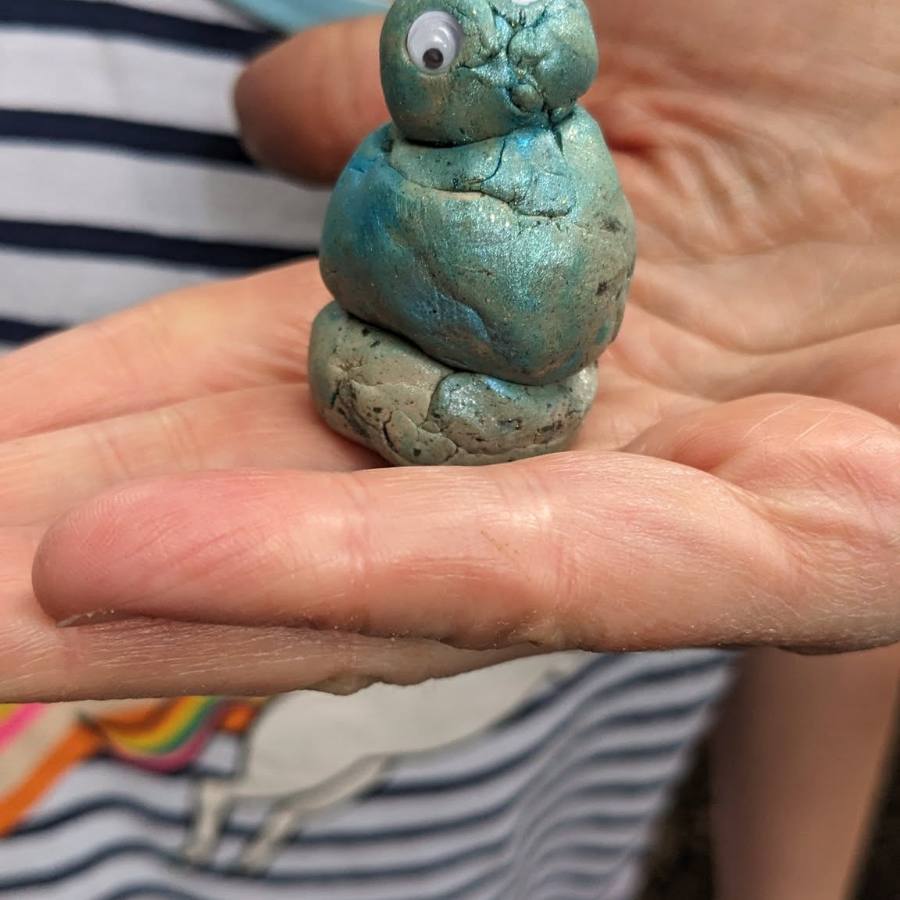 Craft
Clay woodland facesPress a handful of clay onto a tree trunk and sculpt a face for it, the fastest route into imaginative play there is, and every tree ends up with a personality.planned 1×
Craft
Clay woodland facesPress a handful of clay onto a tree trunk and sculpt a face for it, the fastest route into imaginative play there is, and every tree ends up with a personality.planned 1×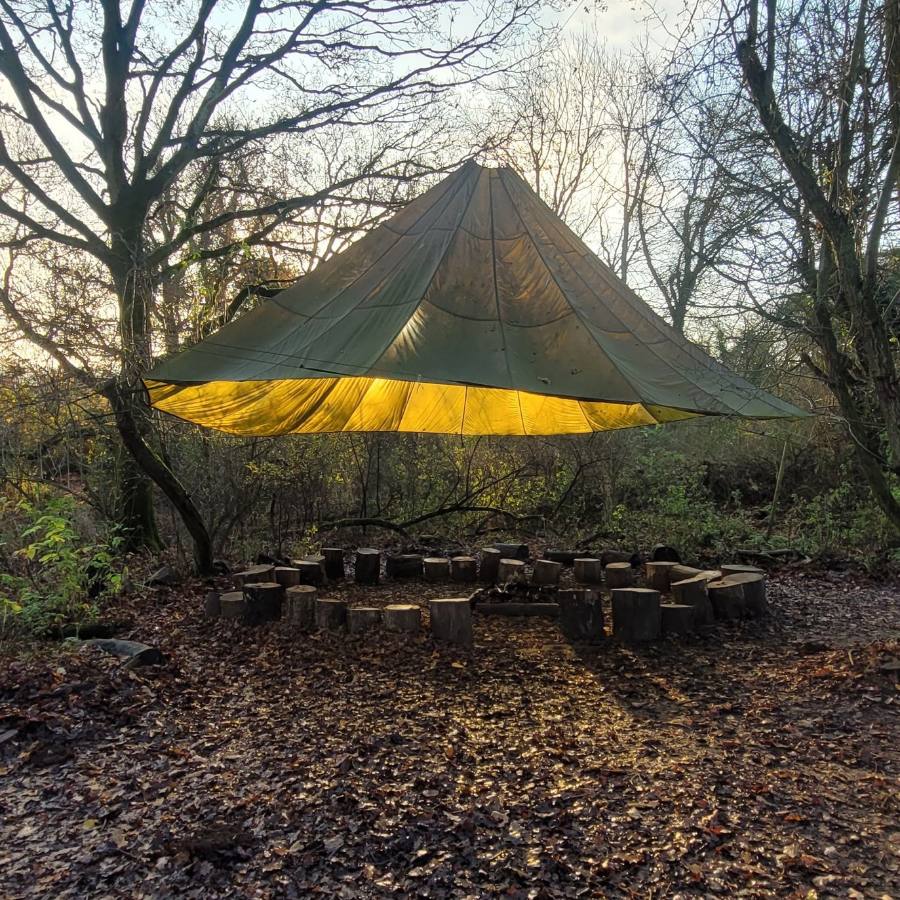 Bushcraft
Den building challengeTeams get a tarp, rope and the woodland, build a shelter that keeps its crew dry through the watering-can rain test at the end.
Bushcraft
Den building challengeTeams get a tarp, rope and the woodland, build a shelter that keeps its crew dry through the watering-can rain test at the end.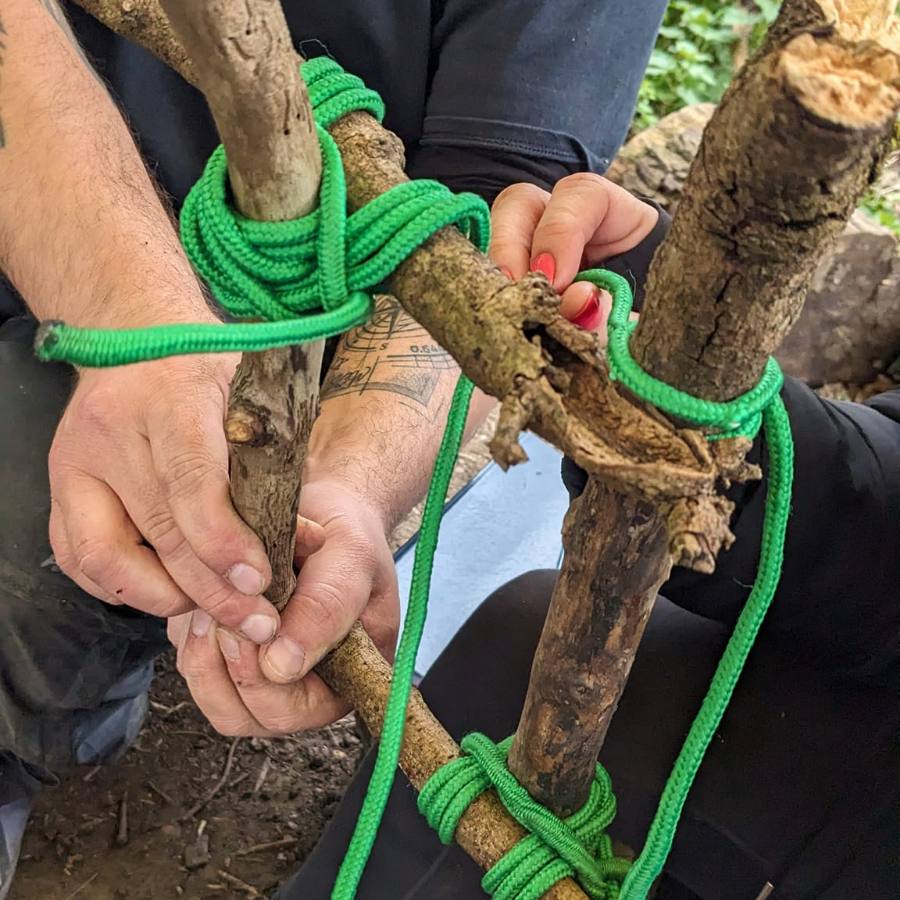 Nature
Journey sticksA stick becomes a map: children fasten a memento of each moment of the walk along it, then retell the journey from their stick, brilliant for language and memory.
Nature
Journey sticksA stick becomes a map: children fasten a memento of each moment of the walk along it, then retell the journey from their stick, brilliant for language and memory.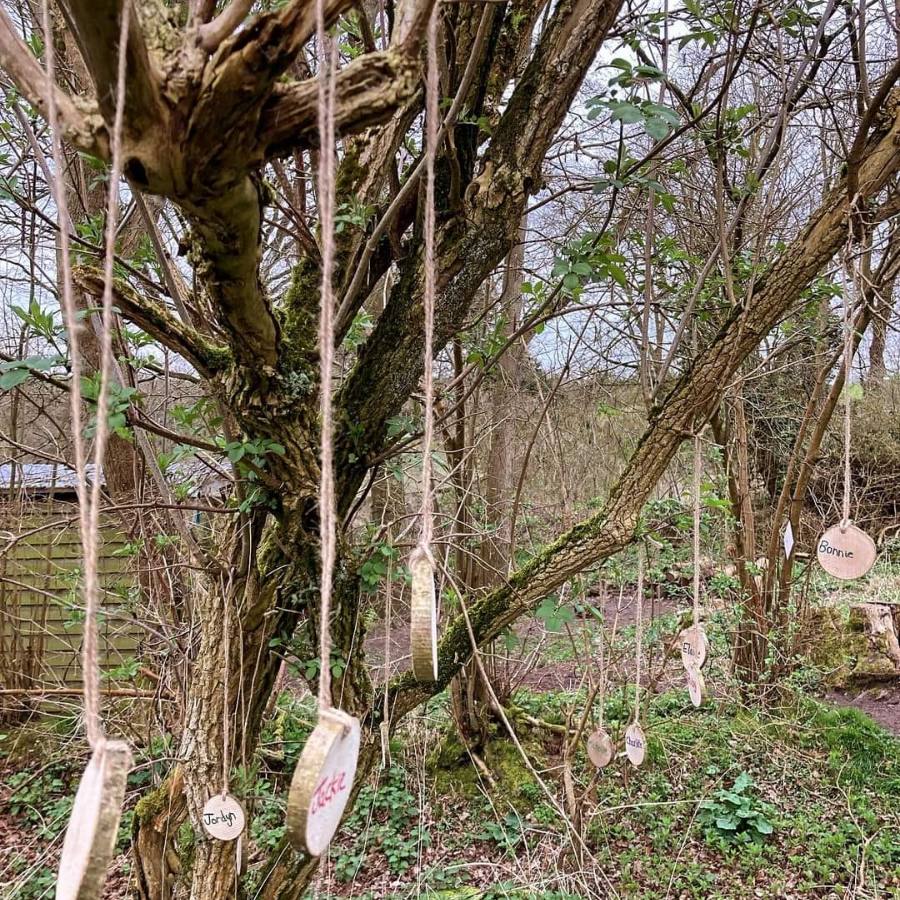 Games
Blindfold string trailA rope wound through the trees becomes a trust walk: blindfolded children navigate hand-over-hand while a partner talks them round. Quiet, focused, surprisingly profound.
Games
Blindfold string trailA rope wound through the trees becomes a trust walk: blindfolded children navigate hand-over-hand while a partner talks them round. Quiet, focused, surprisingly profound.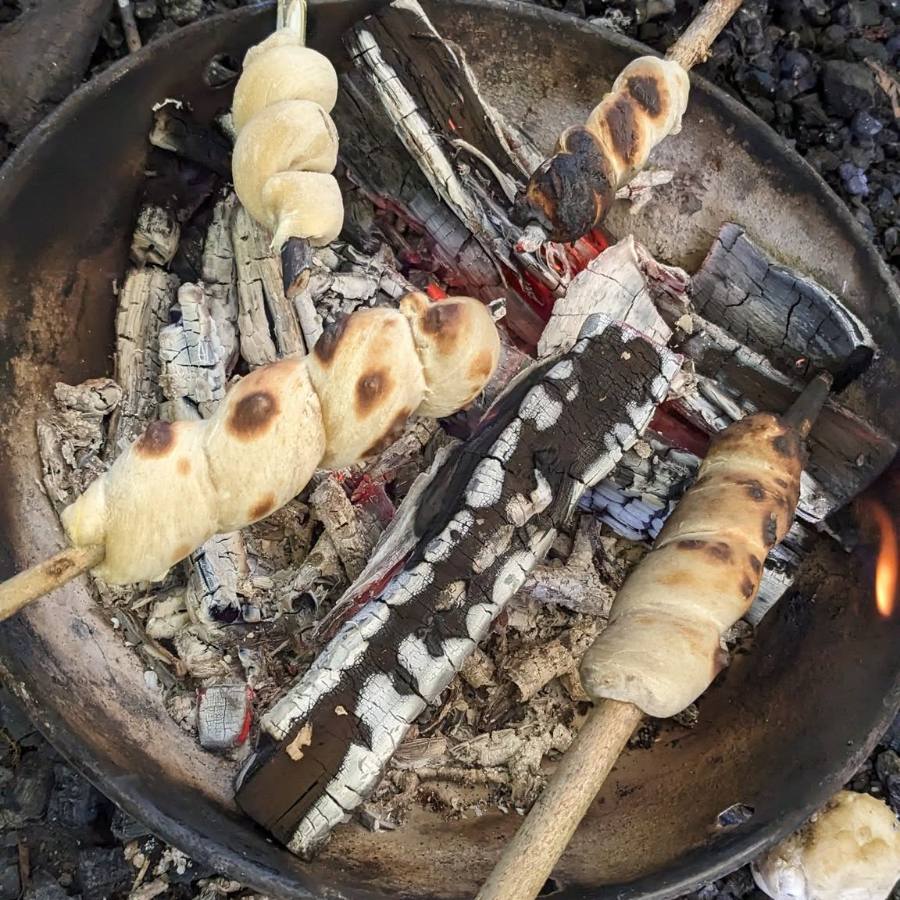 Fire
Campfire toasting sticksWhittle a green-wood toasting stick with a potato peeler, then use it the same session, marshmallows or bread twists over the embers. Tool work with an immediate, delicious purpose.
Fire
Campfire toasting sticksWhittle a green-wood toasting stick with a potato peeler, then use it the same session, marshmallows or bread twists over the embers. Tool work with an immediate, delicious purpose.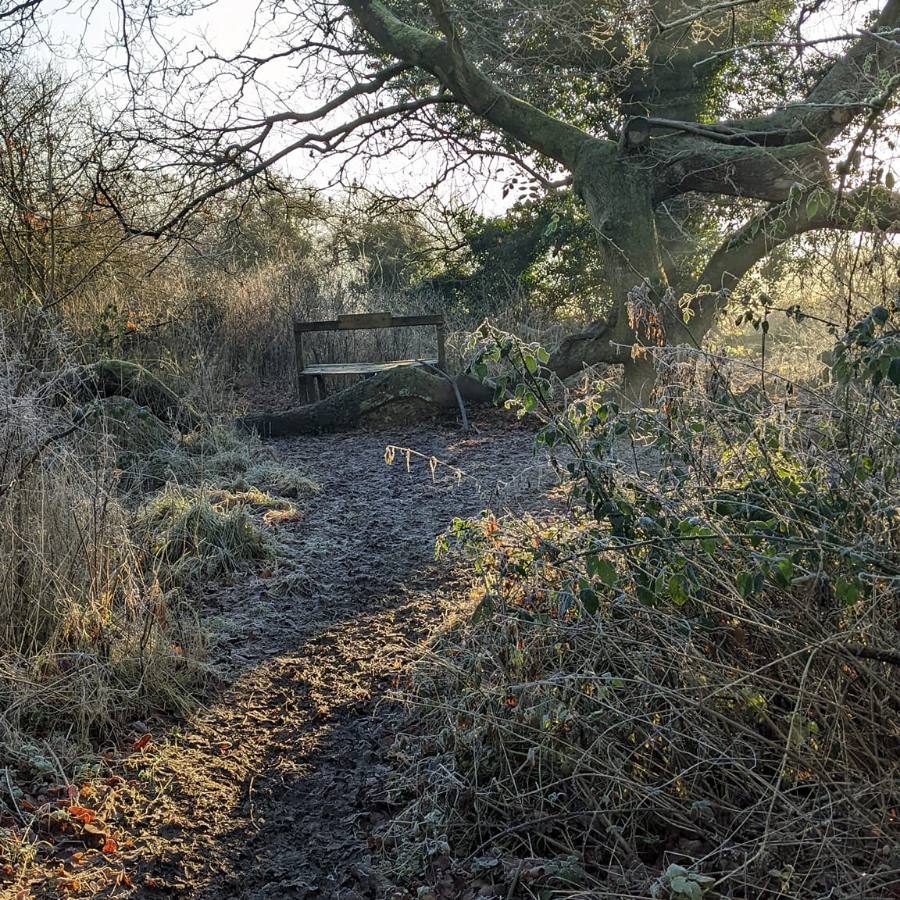 Nature
Sit spots and sound mapsFive minutes alone (in sight) with a card and a crayon: you are the X, mark every sound around you. The simplest mindfulness practice in the woods, and it works on every age.
Nature
Sit spots and sound mapsFive minutes alone (in sight) with a card and a crayon: you are the X, mark every sound around you. The simplest mindfulness practice in the woods, and it works on every age.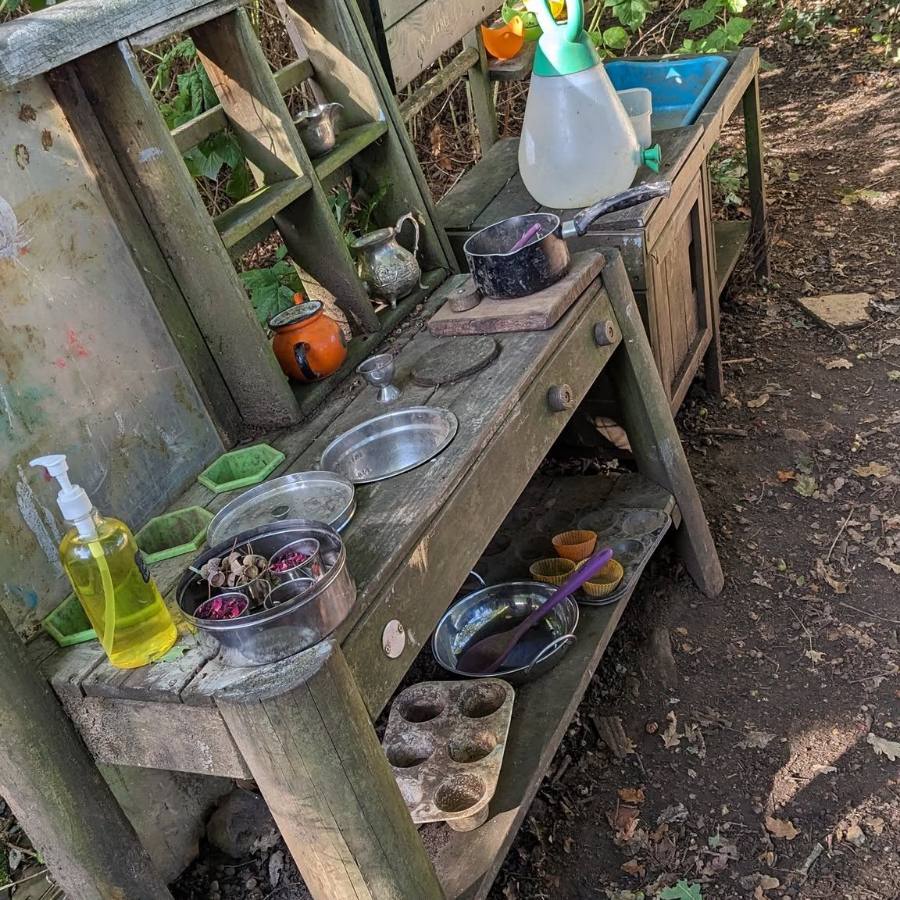 Mud & water
Mud kitchen bake-offThe mud kitchen goes competitive: menus, mud pies with foraged 'sprinkles', and a judging panel with strong opinions about presentation.
Mud & water
Mud kitchen bake-offThe mud kitchen goes competitive: menus, mud pies with foraged 'sprinkles', and a judging panel with strong opinions about presentation.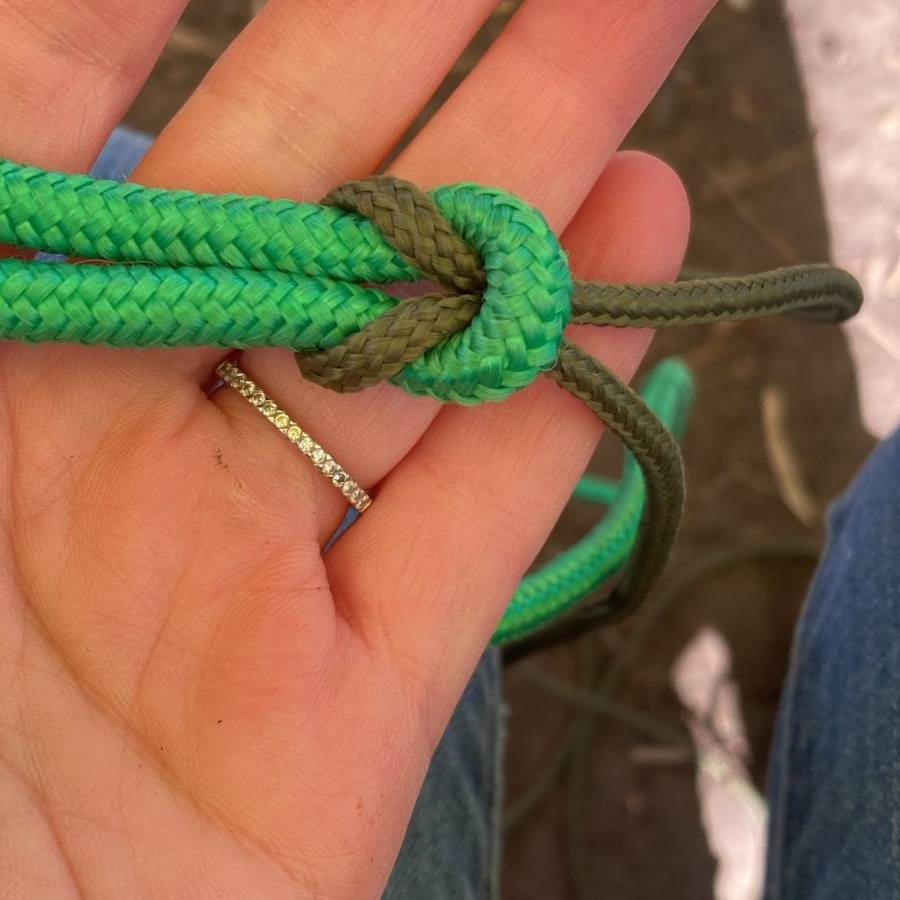 Ropes & knots
Knot race relaysClove hitch, figure-of-eight, reef knot, taught once, then raced: first team to tie the course wins. Repetition without anyone noticing they're practising.
Ropes & knots
Knot race relaysClove hitch, figure-of-eight, reef knot, taught once, then raced: first team to tie the course wins. Repetition without anyone noticing they're practising.What makes a forest school activity
Almost anything can be done in a wood. That doesn't make it a forest school activity. The difference isn't the activity at all, it's how much of it belongs to the child. A group led briskly through a craft to a finished product everyone takes home has done an outdoor craft session. The same craft, set out and then left alone, with time to make a mess of it twice before it works, is Forest School.
That's why the ideas here are written as starting points rather than lesson plans. Each one gives you the kit, the rough shape of it, and the things practitioners wish they'd known, and then stops, because the next part depends on your wood, your weather and which child turns up having had a hard morning. The six principles describe a long-term, learner-led process; a plan detailed enough to follow minute by minute is usually a plan that's stopped listening.
Expect a good activity to be slower than you budgeted for, to be repeated across several weeks before it lands, and to be at the edge of what the group can already do. Fire, tools, heights and deep mud earn their place precisely because they carry real risk and real reward, which is a decision to make deliberately, in a risk-benefit assessment, rather than by avoiding the whole category.
- Pick fewer activities and run them longer. Repetition is where the skill actually lands.
- Set the boundaries (site, tools, what we take from the wood) before the activity, not during it.
- Let the group change it. An idea they've rewritten is an idea they own.
- Write the risk-benefit for your own site. A generic one describes somebody else's wood.
Planning a session around them
One activity is rarely a session. Most leaders build around a settled arrival, something with a bit of risk in the middle, food, and a proper ending, and then let the middle go where the group takes it. Our guide to planning a session walks through that shape, and ratios covers how many adults each of these actually needs.