From practitioners, for practitioners 🌿
Forest school games
Hiding, stalking, chasing, teaming up. Games are how a collection of children becomes a group.
5 ideas, best for October first
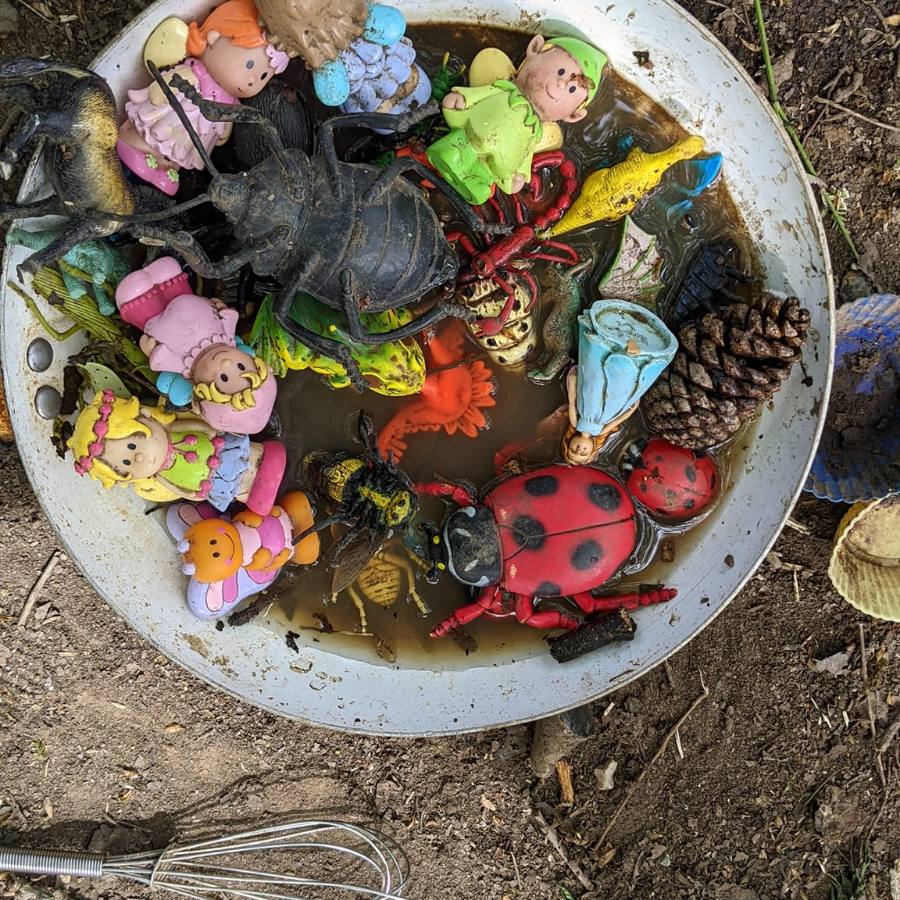 Craft · Halloween
Woodland wands and potionsHalloween the forest-school way: whittle-free wand decorating, then a potion station of mud, petals and 'eye of newt' (acorns) with incantations mandatory.
Craft · Halloween
Woodland wands and potionsHalloween the forest-school way: whittle-free wand decorating, then a potion station of mud, petals and 'eye of newt' (acorns) with incantations mandatory.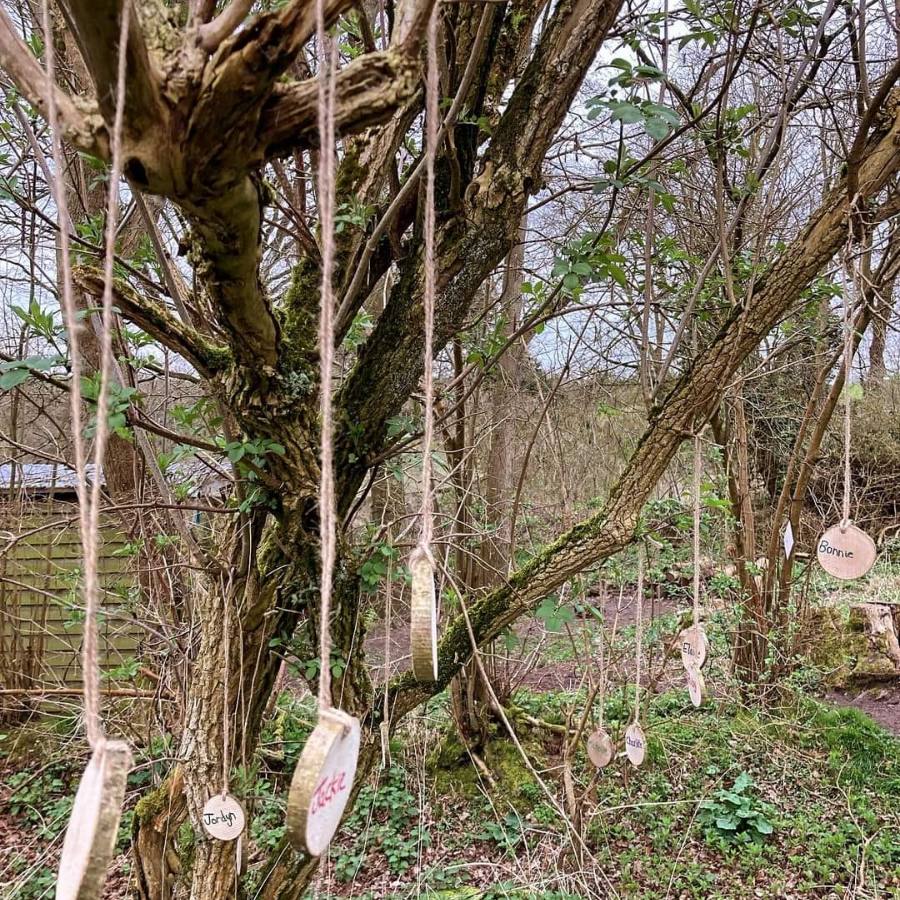 Games
Blindfold string trailA rope wound through the trees becomes a trust walk: blindfolded children navigate hand-over-hand while a partner talks them round. Quiet, focused, surprisingly profound.
Games
Blindfold string trailA rope wound through the trees becomes a trust walk: blindfolded children navigate hand-over-hand while a partner talks them round. Quiet, focused, surprisingly profound.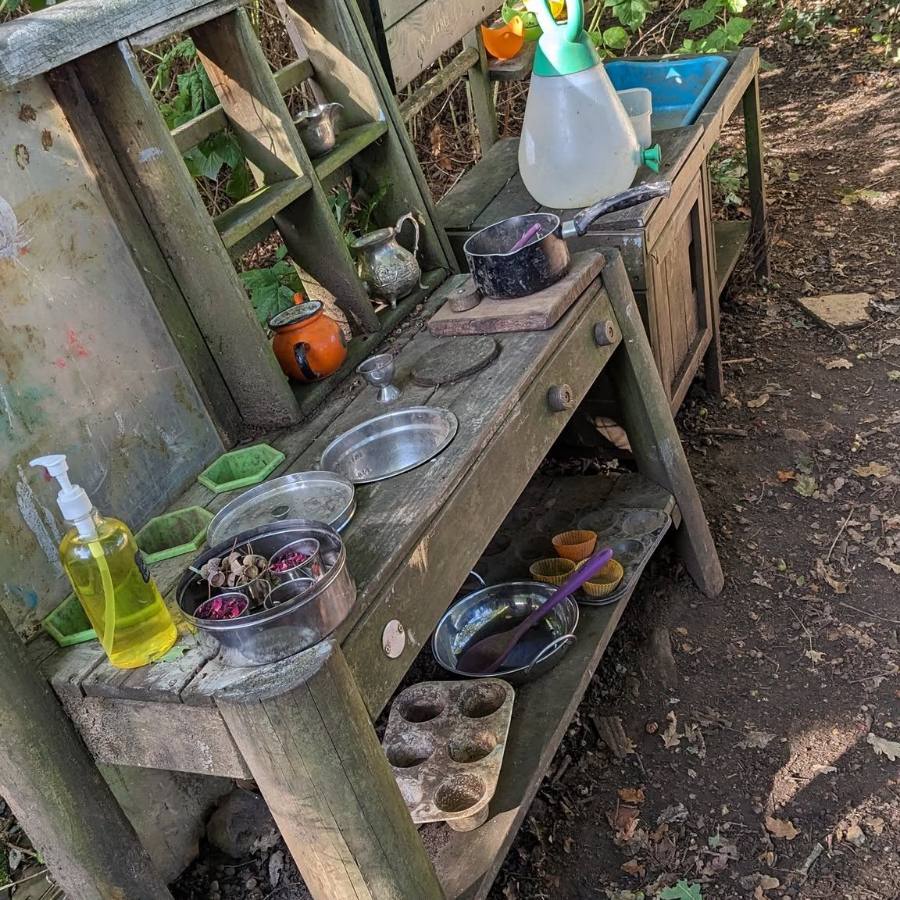 Mud & water
Mud kitchen bake-offThe mud kitchen goes competitive: menus, mud pies with foraged 'sprinkles', and a judging panel with strong opinions about presentation.
Mud & water
Mud kitchen bake-offThe mud kitchen goes competitive: menus, mud pies with foraged 'sprinkles', and a judging panel with strong opinions about presentation.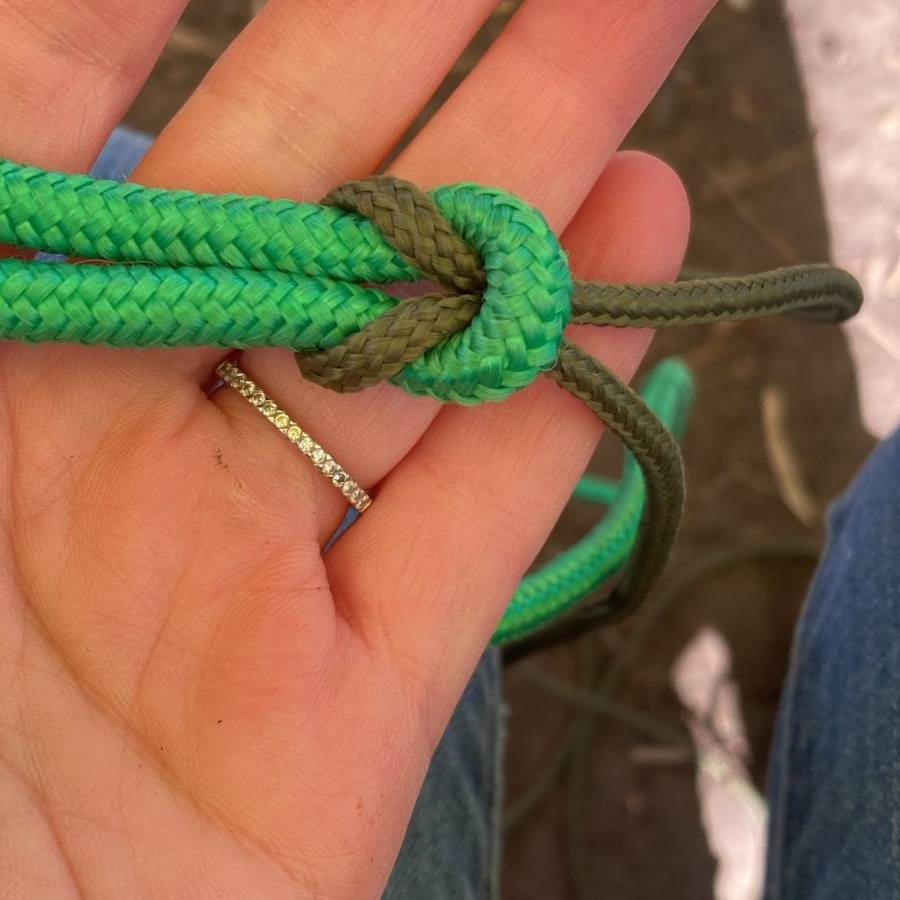 Ropes & knots
Knot race relaysClove hitch, figure-of-eight, reef knot, taught once, then raced: first team to tie the course wins. Repetition without anyone noticing they're practising.
Ropes & knots
Knot race relaysClove hitch, figure-of-eight, reef knot, taught once, then raced: first team to tie the course wins. Repetition without anyone noticing they're practising.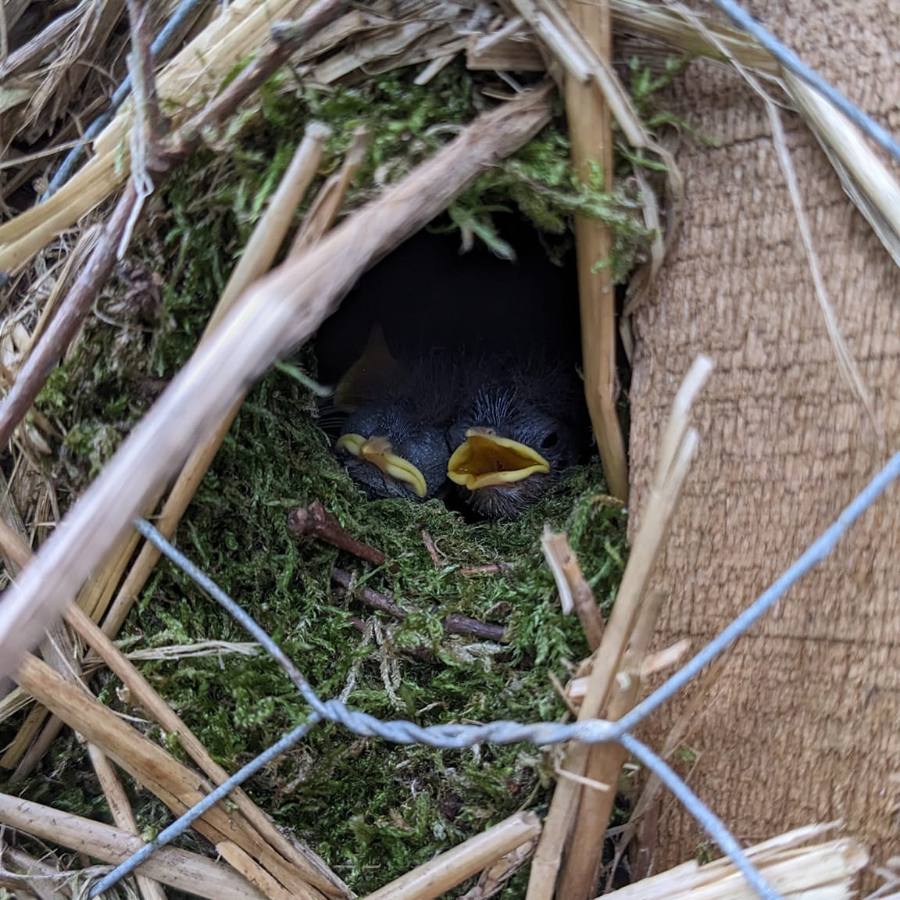 Nature · Easter
Bird nest building challengeCould YOU build a nest with only a beak? Pairs get 'beak rules' (finger and thumb only) and race the clock to build a nest that cradles a real egg. Perfect for spring and Easter.
Nature · Easter
Bird nest building challengeCould YOU build a nest with only a beak? Pairs get 'beak rules' (finger and thumb only) and race the clock to build a nest that cradles a real egg. Perfect for spring and Easter.Running games well
A game at the start settles a group and a game at the end sends them home high. Woodland games use the site itself, the trees to hide behind, the slope to run down, the dark corner nobody has been into yet, so they double as how children learn where they are.
Not every game needs a winner. The stalking games, the listening games, the ones where the whole group has to move without being heard, do more for a group than anything competitive. And a game a child invents and the group adopts is worth ten off a list.
- Set the boundary (a named tree, a path, a fence line) and walk it before you play, not during.
- Keep two or three games you can start in eight seconds, for the moment a session goes flat.
- Watch the running surface. Roots, slope, brambles and a wet December change what you can safely play.
- Let them change the rules. A game the group has rewritten is a game the group owns.