From practitioners, for practitioners 🌿
Forest school activities for EYFS
Two to five year olds in a wood. Less programme, more repetition, and a great deal more mud than anybody's plan allowed for.
4 ideas
 Craft · Halloween
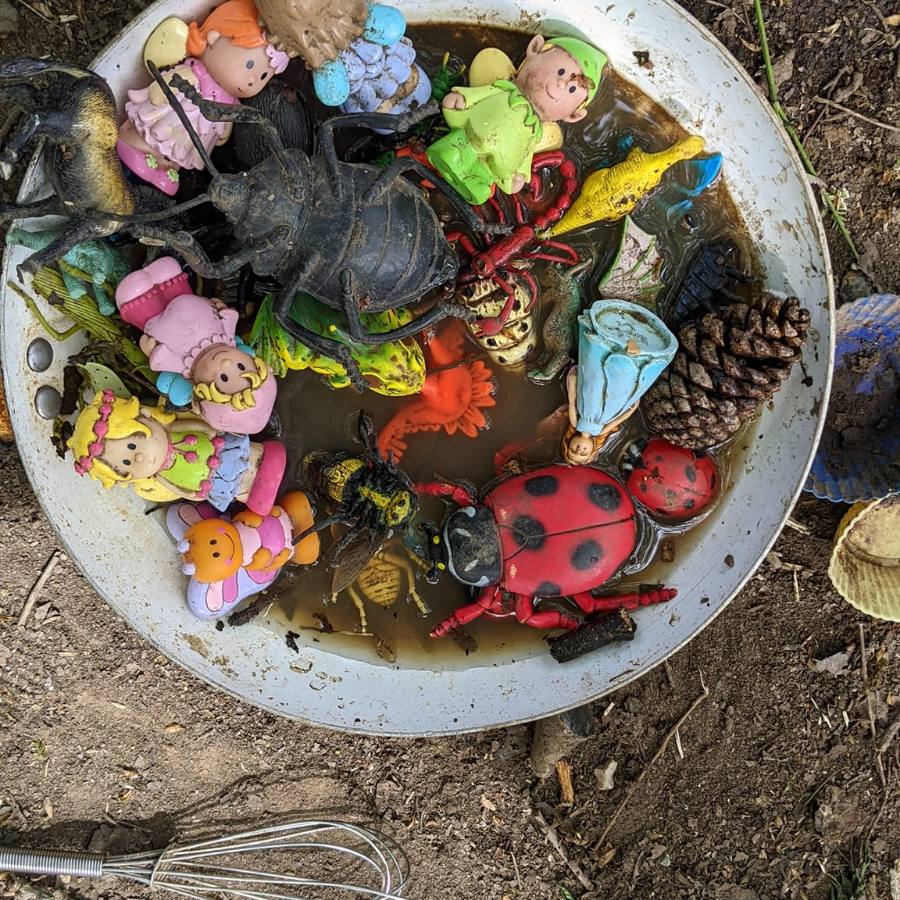
Woodland wands and potionsHalloween the forest-school way: whittle-free wand decorating, then a potion station of mud, petals and 'eye of newt' (acorns) with incantations mandatory.
Craft · Halloween
Woodland wands and potionsHalloween the forest-school way: whittle-free wand decorating, then a potion station of mud, petals and 'eye of newt' (acorns) with incantations mandatory.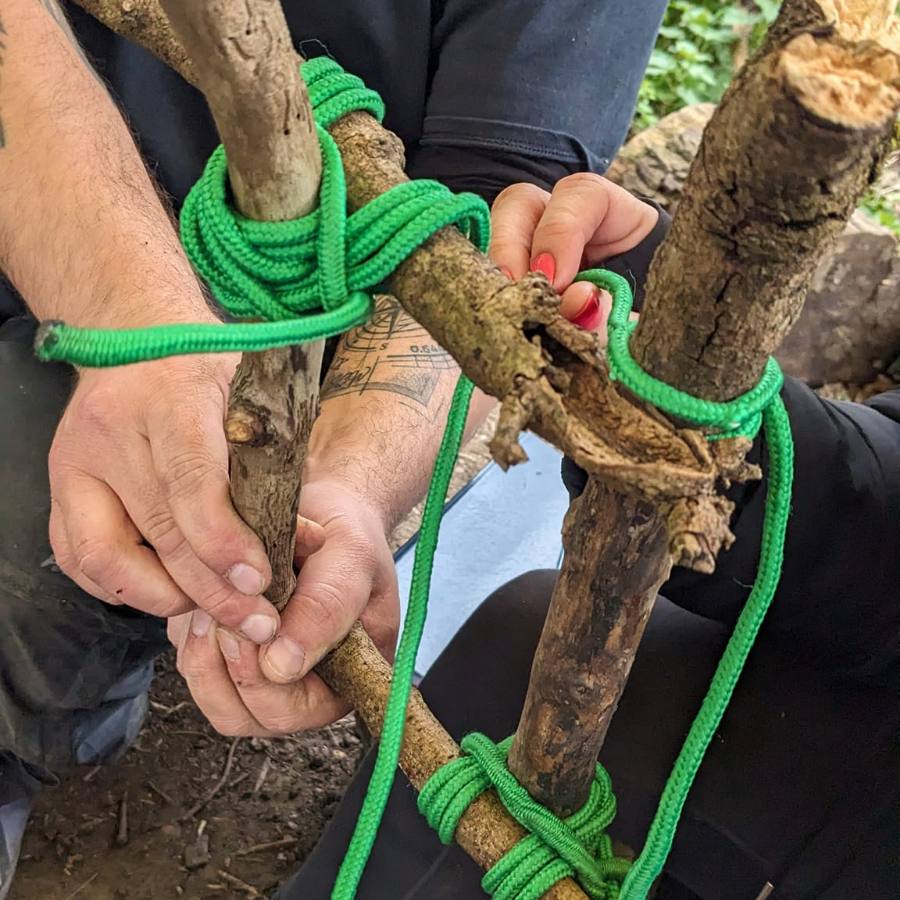 Nature
Journey sticksA stick becomes a map: children fasten a memento of each moment of the walk along it, then retell the journey from their stick, brilliant for language and memory.
Nature
Journey sticksA stick becomes a map: children fasten a memento of each moment of the walk along it, then retell the journey from their stick, brilliant for language and memory.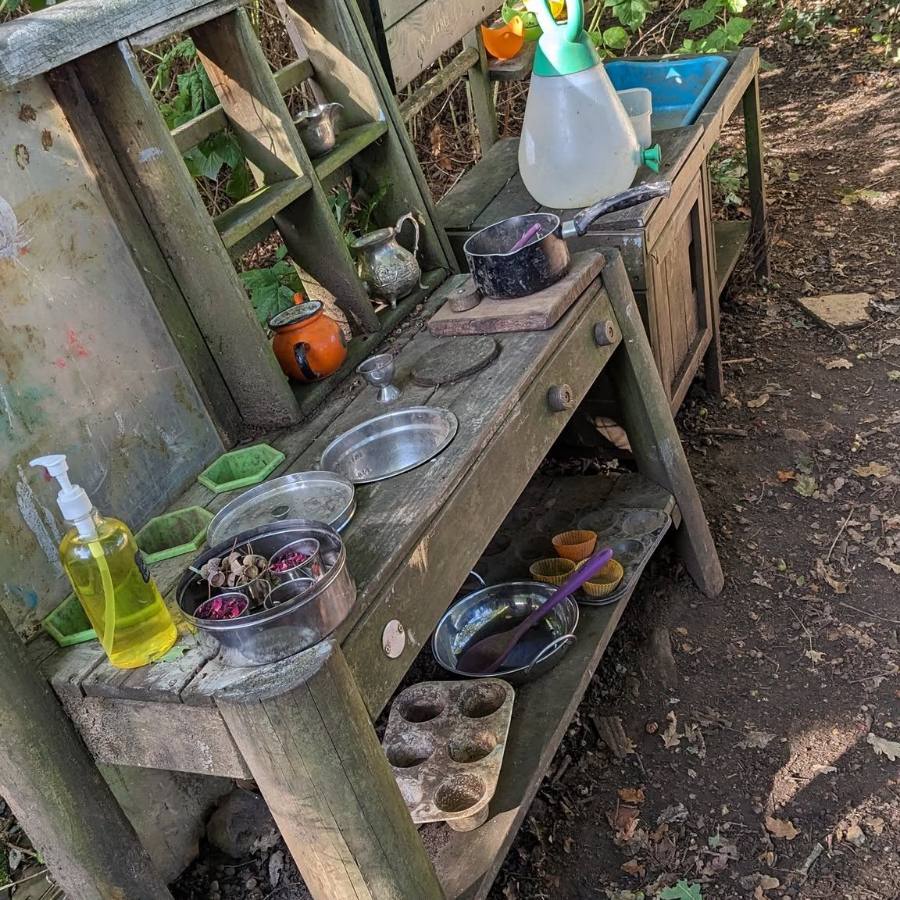 Mud & water
Mud kitchen bake-offThe mud kitchen goes competitive: menus, mud pies with foraged 'sprinkles', and a judging panel with strong opinions about presentation.
Mud & water
Mud kitchen bake-offThe mud kitchen goes competitive: menus, mud pies with foraged 'sprinkles', and a judging panel with strong opinions about presentation.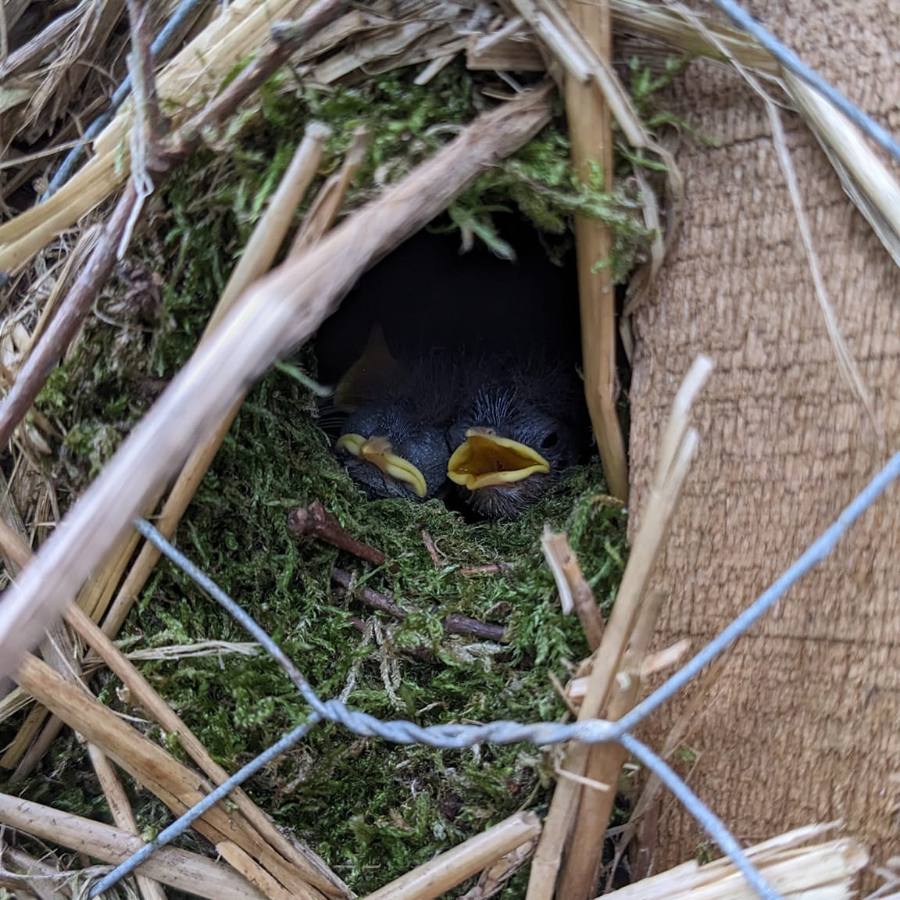 Nature · Easter
Bird nest building challengeCould YOU build a nest with only a beak? Pairs get 'beak rules' (finger and thumb only) and race the clock to build a nest that cradles a real egg. Perfect for spring and Easter.
Nature · Easter
Bird nest building challengeCould YOU build a nest with only a beak? Pairs get 'beak rules' (finger and thumb only) and race the clock to build a nest that cradles a real egg. Perfect for spring and Easter.Running forest school with early years
The biggest adjustment for early years isn't the activity, it's the amount of it. A session that would carry a Year 4 group through one long project will carry a reception group through about twenty minutes, and then they'll want to do the same thing again next week, and the week after, and get more out of it each time. Plan one thing, not four, and plan to repeat it.
What looks like not doing the activity is usually the actual learning. The child who ignores the mud kitchen to carry buckets of bark from one end of the site to the other and back is doing serious, repetitive, self-directed work, the schemas of transporting and enveloping that early years practitioners will recognise instantly. Following that is more valuable than redirecting it towards your plan.
This is also the age where forest school does its clearest work on confidence, because the risks are real and scaled right: a log to balance on, a stick to carry, a slope to get down without help. Fire and tools are absolutely possible with this age group, done properly, smaller groups, more adults, and the tool talk every single time.
Practically: everything takes longer. Getting waterproofs on is the first activity of the session, not something that happens before it. Build that in and it stops being a source of stress for everyone.
How many adults each of those wants is its own question, see forest school ratios, and observing EYFS outdoors for recording what you see without stopping the play to do it.
- Plan one activity, not four, and expect to run it again next week. Repetition is where it lands.
- Getting kit on and off IS the session's first and last activity. Time it properly.
- Follow the schema. Carrying, filling, emptying and hiding are the work, not a distraction from it.
- Sort the clothing message with families once, plainly. A child kept clean has been kept out of the session.
- Fire and tools work at this age with smaller groups and more adults, never as an add-on to a busy session.
- Hand-washing before food is the one non-negotiable. Everything else can stay filthy.